How to Get a Qatar Visa in 2026
Securing a visa is the first step for any expat planning to settle in Qatar. In 2026, the government has moved toward a more automated, digital system to process residency permits and tourist entry. Whether you are coming for employment or bringing your spouse and children, understanding the updated Visas & Permits regulations is crucial to avoid delays or legal fines.
This handbook provides the most current information on sponsorship requirements, conversion rules, and digital application steps.
1. The Work Residency Permit (RP) Process
Most expats enter Qatar on an employment visa. Your employer acts as your sponsor, but you must complete several steps after arrival to get your final Residency Permit (RP) card.
Post-Arrival Steps (Must be completed within 30 days):
- Medical Commission: You must undergo a blood test and chest X-ray to screen for infectious diseases.
- Fingerprinting: After passing the medical test, visit the MOI Evidence and Criminal Intelligence Department for biometric scanning.
- QID Issuance: Once fingerprinting is cleared, your employer will print your Qatar ID card.
Pro-Tip: In 2026, employers must initiate your RP process within 7 days of your arrival. Always keep a digital copy of your visa on your phone via the Metrash2 app.
2. Family Residence Visa: New Salary Requirements
If you wish to sponsor your family, you must meet the updated financial and professional criteria set by the MOI in late 2024 and maintained through 2026.
Eligibility Criteria:
- Profession: You must have a non-labor profession (technical or specialized) as listed on your QID.
- Private Sector Salary: You need a minimum monthly salary of QR 10,000, or QR 6,000 + Company Housing.
- Public Sector Salary: Government employees generally require a minimum of QR 10,000.
- Education: Children over 6 years old must be enrolled in an accredited school to renew their residency.
3. The Hayya Platform: More Than Just a Tourist Visa
In 2026, the Hayya platform remains the primary portal for tourists. However, it now features new sub-categories that make visit-to-work transitions more transparent.
- Hayya A1 (Tourist): Valid for 30 days, extendable for another 30.
- Hayya A2 (GCC Residents): Now allows stays of up to 2 months with multiple-entry access.
- Hayya A3 (Visa with ETA): For those holding valid visas/residencies from the US, UK, Canada, or Schengen.
Can you convert a Hayya visa to a Work Visa?
Yes, but you cannot work while on a tourist status. Your prospective employer must apply for a “Change of Status” through the Ministry of Labour while you are in the country, or you may be required to exit and re-enter on a formal entry permit.
4. Travel Bans and Visa Validity
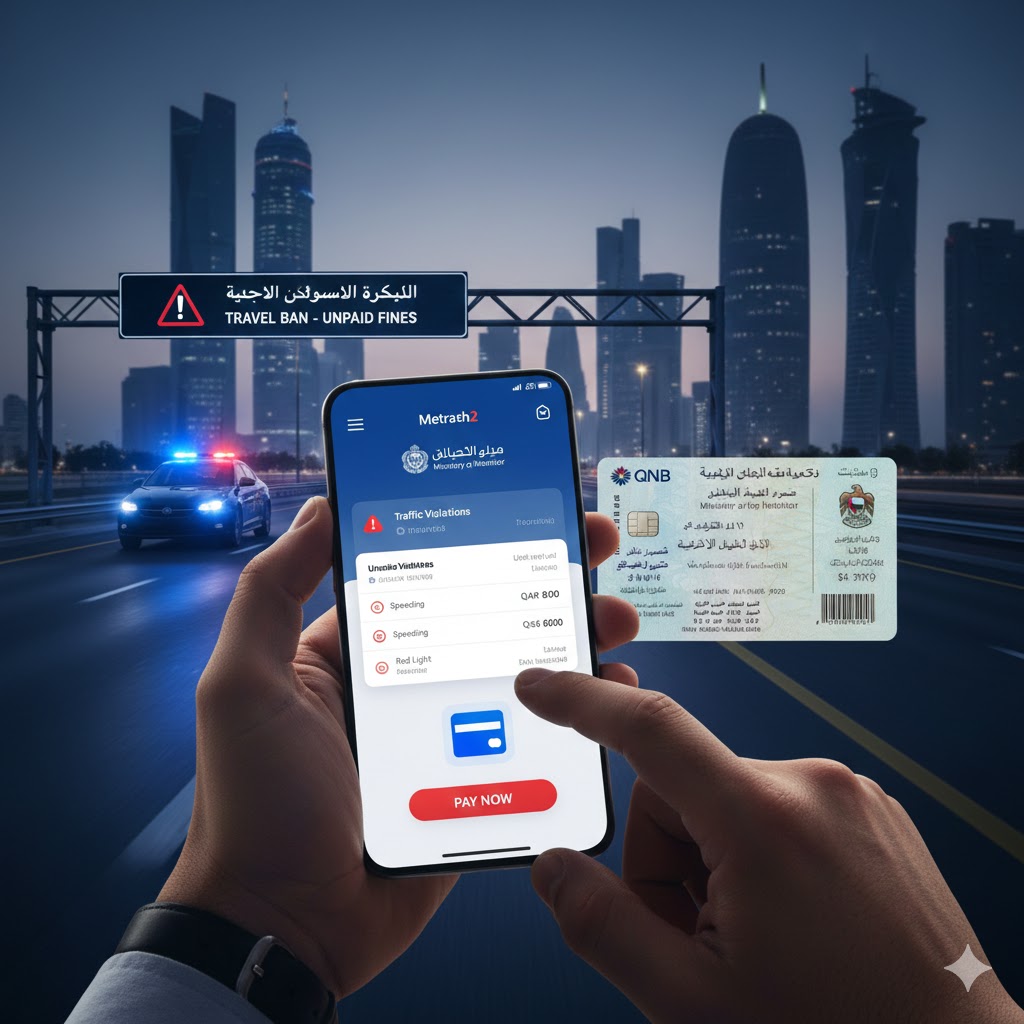
A significant update in 2026 is the enforcement of the Exit Regulation. You cannot leave the country or renew your residency if you have outstanding fines. Before traveling, check for any Traffic & Fines registered against your QID.
Furthermore, if you are looking to secure long-term residency without an employer, you should explore how to Invest in Qatar Real Estate, as property ownership of $200,000 now grants automatic residency.
5. Visa Status Check and Fees
| Visa Type | Fee (Approx.) | Duration |
| Work Residency | QR 1,000 (Annual) | 1, 2, or 3 Years |
| Family Residence | QR 500 (Annual) | 1 to 5 Years |
| Hayya A1/A2/A3 | QR 100 | 30 – 60 Days |
| Medical Test | QR 100 | One-time |
Frequently Asked Questions (FAQs)
1. What is the minimum salary to sponsor my spouse in 2026?
You need a minimum salary of QR 10,000, or QR 6,000 if your company provides family-specific housing.
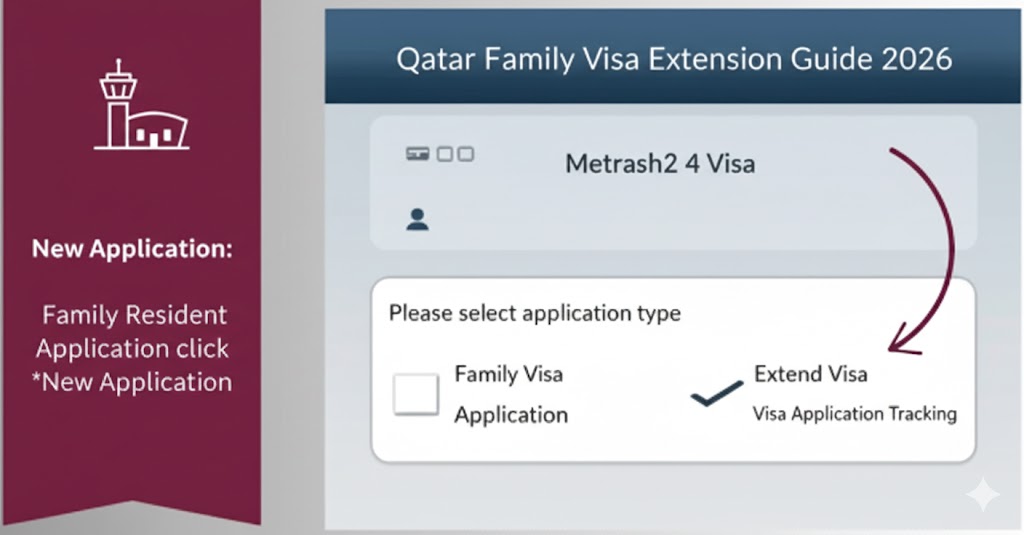
2. Can I apply for a family visa through Metrash2?
Yes, the entire process—from uploading marriage certificates to paying fees—is now done digitally through Metrash2.
3. Is health insurance mandatory for all visas?
Yes. Since 2023, all visitors and residents must have a valid health insurance policy covering their entire stay in Qatar.
4. How long does it take to get a Work Residence Permit?
Once you arrive, the medical and fingerprinting process typically takes 2 to 4 weeks to complete.
5. Can my children stay on my sponsorship if they are over 18?
Unmarried daughters can remain on your sponsorship indefinitely. Sons can remain until age 25 if they are studying.
6. What happens if I overstay my visa?
The fine for overstaying is typically QR 200 per day. It is critical to apply for an extension or renewal before the expiry date.
7. Can I bring my parents on a permanent residence visa?
Sponsoring parents is possible but requires MOI approval on a case-by-case basis and usually a higher salary threshold.
8. Do I need an NOC to change my job in 2026?
While the law allows changing jobs, you must follow the correct notification period (1-2 months) via the Ministry of Labour portal.
9. How can I check my visa status?
You can use the “Visa Inquiry” service on the Ministry of Interior (MOI) website by entering your passport or visa number.
10. What is the Hayya A2 visa?
This is specifically for GCC residents. In 2026, it allows for a 60-day stay with multiple entries.
11. Are there age limits for family visit visas? There are no strict age limits for family visit visas, but the sponsor must demonstrate they can support the visitors.
12. Can a wife sponsor her husband?
Yes, women in certain professional categories (doctors, engineers, teachers) can sponsor their husbands and children.
13. Do I need to attest my degree for a work visa?
Yes, all educational certificates must be attested by the Ministry of Foreign Affairs in your home country and the Qatar Embassy.
14. What is a “Block Visa”?
A block visa is a group of labor quotas granted to a company. If you are hired, you are assigned one of these slots.
15. Can I enter Qatar if my passport expires in 5 months?
No. Your passport must be valid for at least 6 months from the date of entry.